

A CONVERSATION WITH BI GAN ON “RESURRECTION”
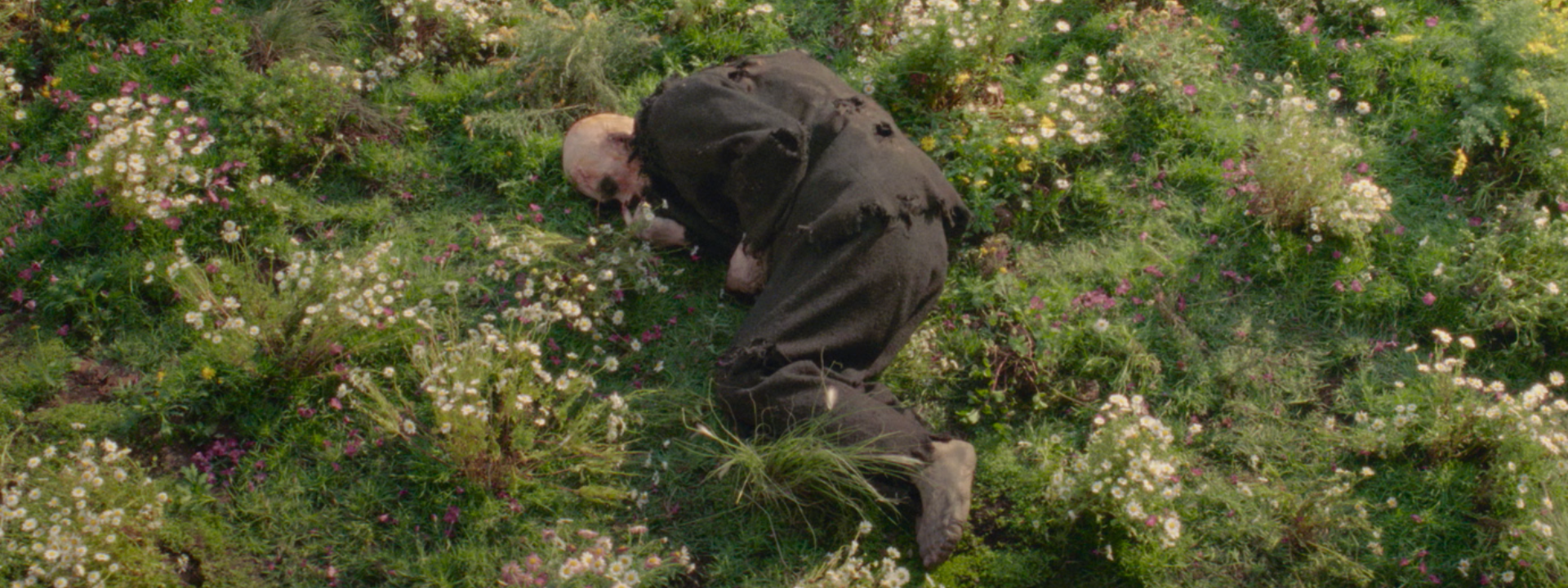
In a future where humanity has surrendered its ability to dream in exchange for immortality, an outcast (Jackson Yee) finds illusion, nightmarish visions, and beauty in an intoxicating world of his own making. A work of staggering imagination from visionary Chinese director Bi Gan (Long Day’s Journey Into Night), Resurrection conjures vast and ever-shifting worlds on the brink of collapse in an era-spanning journey through our deepest and most human desires.
Your last feature film was seven years ago. What was the original inspiration behind RESURRECTION?
Bi Gan: After LONG DAY’S JOURNEY INTO NIGHT, something very special happened — the whole world went through the pandemic. Before 2020, I was already working on the script for my next feature film, which was inspired by a real-life news event and explored the psychological state of a murderer. I wanted to change my filmmaking approach, aiming for a narrative rich in detail, and dense with specific, tangible elements. I was inspired by the theme of “human destiny, ” which led me to begin writing about the fate of a murderer. I worked on this for a long time, up until early 2020. Then, one day, I realized I needed to rethink my approach to creative work. I decisively set aside what I had written and decided not to pursue it further. I wanted to start a new story, and instinctively felt it should be connected to the entire century.
Being related to the entire century means writing a story that can go through over the past hundred years, condensing the expression about the previous century within the duration of a single film?
Yes. I think, first of all, the language I’m most comfortable with is definitely cinema. Cinema has its own history, and I have a clear understanding of film history. But within that context, I feel that every piece of land, every people has its own fate. Over the past century, a question naturally arises: What philosophical questions does a person with this blood and these genes, living in this place today, face? For example, in the literature of many countries, I think there is always this person, this character, or this symbol—someone who is suffering, longing for something better, yet also, in their own way, engaging in self-destruction. They suddenly find themselves caught in a destiny they cannot control, but that destiny is universal. It’s not just specific to one country or one ethnicity. This made me think about creating a “Movie Monster, ” because film, as a medium, is the most suited for expressing such a concept. At the same time, when I was creating this film, I wanted to overload the information. I wanted the audience to experience, like the monster itself, a century within a two-and-a-half-hour film. I wanted to revive the beauty that once belonged to cinema.
History, or perhaps the historicity was not something you were interested in before?
In my previous works, there wasn’t a sense of history, or rather, the historical coordinates were always removed from my films—because I never considered that aspect. But when I began to reflect on who I am, I found that I have history, and my history has stories. And this made me want to explore what exactly happened.
So from the very beginning, was the entire project conceived as a dialogue with the history of cinema?
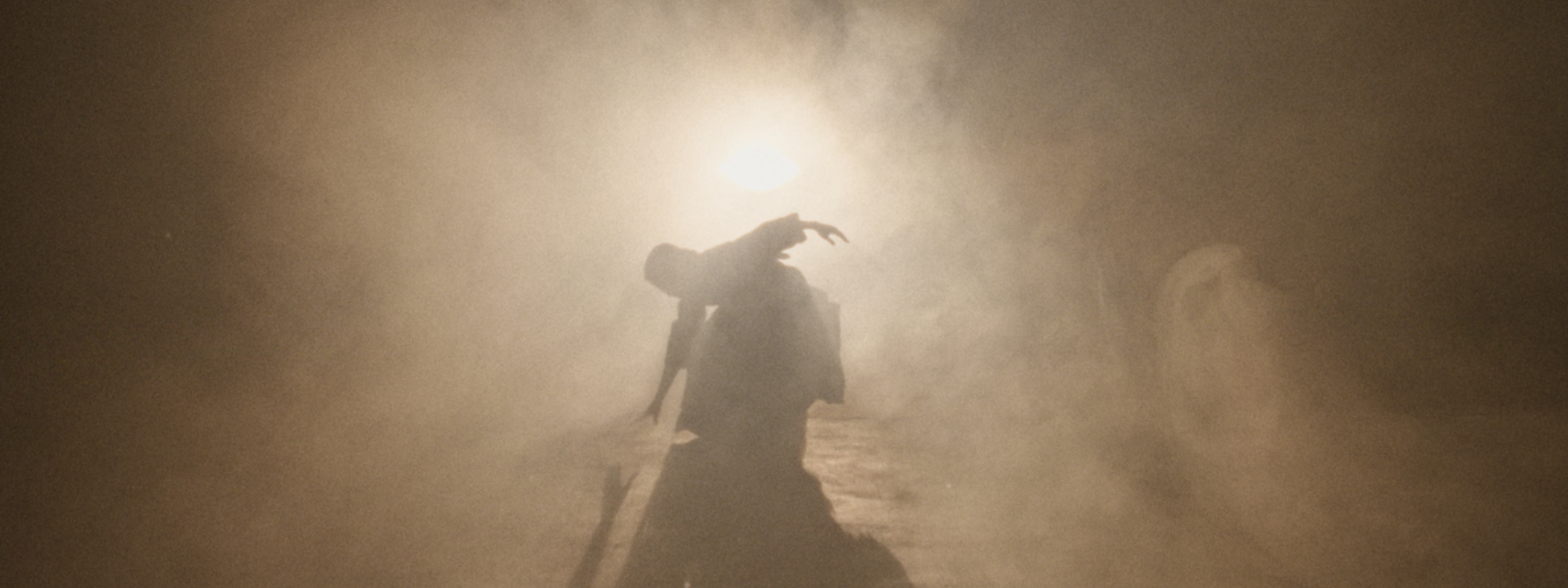
I would say that from the beginning, the idea was there. But after a while, I kept trying to avoid anything related to film, because I wondered whether the subject could be something other than a “Movie Monster.” Yet in the end, even right up until we were about to start shooting, I realized that this idea of a movie monster was something I couldn’t escape. None of the other directions felt right, and I couldn’t come up with anything better. Perhaps, in my heart, it had already become a haunting monster. So gradually, I developed this story—about a movie monster drifting through a century of illusion and dreams. As the hundred years pass, its sight, hearing, taste, smell, and touch are stripped away one by one, until finally, its consciousness fades completely.
The different stories of this film kept evolving—it was already different before shooting, dur-ing production, and then it changed significantly again in the editing stage. Looking back at the various versions of the story, it seems that what truly interests you is the “storytelling” itself, rather than what we usually assume: the “audiovisual language”?
I think this is indeed a common misunderstanding, even among those who are somewhat familiar with my works. They often assume that I care more about form, more about visual creation. In fact, what interests me most is how to tell a story— it’s just that the way I tell it each time might be a little unusual. A core element of filmmaking is undoubtedly its narrative instinct. However, this narrative instinct is not merely about telling a story to the audience; it’s about using the story to reflect a certain fate.
In terms of your working method, perhaps “discovering the story” is a more accurate way to describe it—whether during the writing phase, or later in filming, editing, and post-production. In the writing stage, you tend to endlessly expand on each plot point, so that many details in the final film, which might not immediately stand out, could actually have originated from stories that were rich enough to stand on their own.
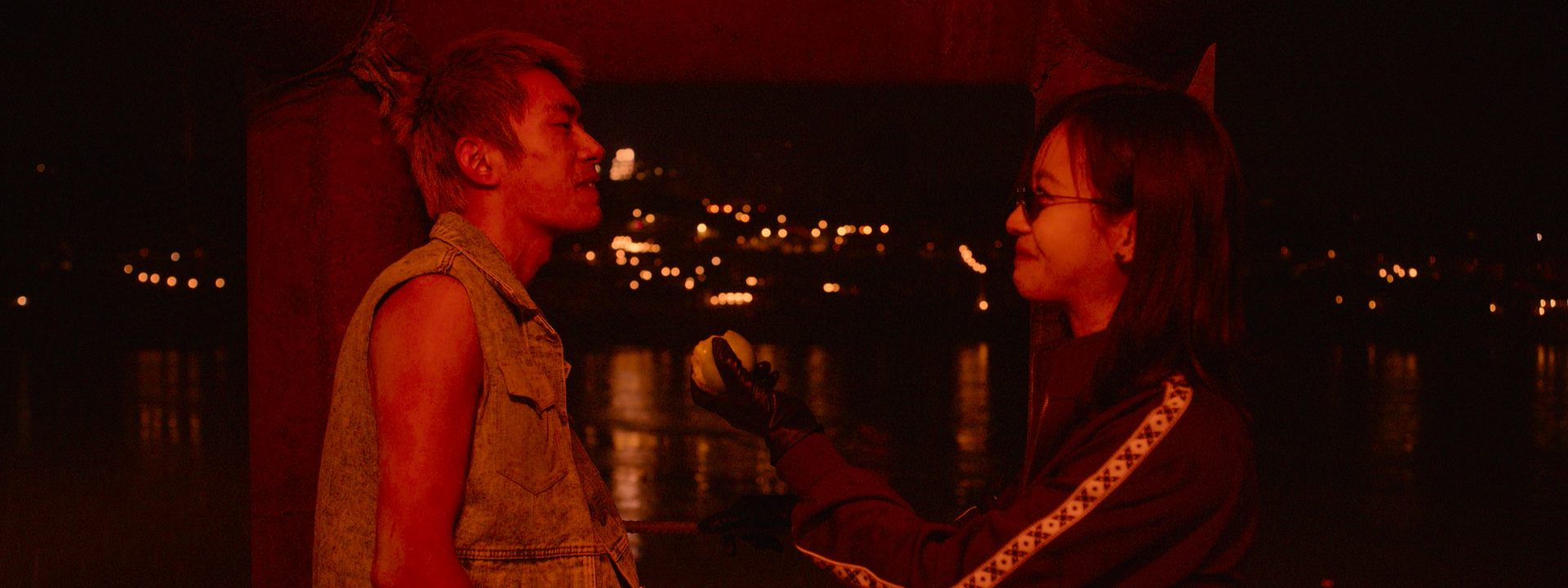
Take the pen in the second part, Qiu, for example. At first, even its backstory was carefully developed in the narrative—it was a pen that had once been used to sign a secret document, and so on. We even held several script meetings just to discuss this one detail. So while such subtle elements from the underlying story may not seem important to the audience, they are deeply important to me. That’s because I can’t decide in advance—before the editing stage—which part or layer of the story I would ultimately want to focus on later. There’s simply too much information contained within it all. For me, storytelling is something dynamic—it shouldn't be a fixed outcome, but rather a process. So if there’s a predetermined result, I would almost certainly avoid following it. By the time I reach the editing stage, the film will inevitably take on a different shape. That’s why my working method involves making extensive adjustments in the editing room—but these adjustments are anticipated. During shooting, I deliberately leave a lot of “air holes” in the material. For instance, I might shoot certain scenes from one or two extra angles, or try out different ways of mise-en-scene, —not always knowing why, just following a sense of intuition, a feeling that something is beautiful or necessary. Then, in editing, I search through that material almost obsessively to weave together the story I’m ultimately trying to tell. So I believe “story” is always something fluid and evolving. That dynamic process of making a story is the core of creation—not the purpose. Its true purpose lies in the “audience”: who the story is meant to be told to. For example, if I intend to tell a story about the collapse of the world, that much is certain from the outset. However, how to construct a narrative that allows the audience to experience this collapse is something I haven't fully determined even at this moment of our conversation.
Would you describe the way you work on set as a form of improvisation?
From a common sense perspective, yes—there’s definitely an element of improvisation in how I work. It happens every time: the day before shooting, we hold a detailed meeting with the key crew to plan out the next day’s shooting details. But once we get on set, things almost always shift completely. What we decided the night before often no longer applies, and this makes everyone quite anxious: why does everything change once we’re on set? I don't think it’s about my style or habit. It’s because being on set brings a very strong emotional response—something tells me there’s a better way to ex-press it. And that “better way” is almost never what we discussed the night before, because that version has already become a predetermined process. Maybe there’s a kind of obsession in that, but essentially, the moment we arrive on set, the shooting plan transforms. There’s also a technical issue here: a fundamental difference between cinema and literature, or written words. Film is inherently different from the notes we write in a meeting, or even the imagination in our minds. This difference doesn’t become clear until everything is in place—the lights, the actors—and suddenly the scene comes alive. Only then do I realize that what we previously planned just isn’t good enough. And by “not good enough, ” I mean it’s not moving—it doesn’t stir anything. But of course, that sense of being “moved” is extremely subjective. So I stop. Whether it’s about stopping the take or starting again the next day, I act based on a very simple criterion: I am not moved.
At this moment, are you someone who relies more on intuition to create?
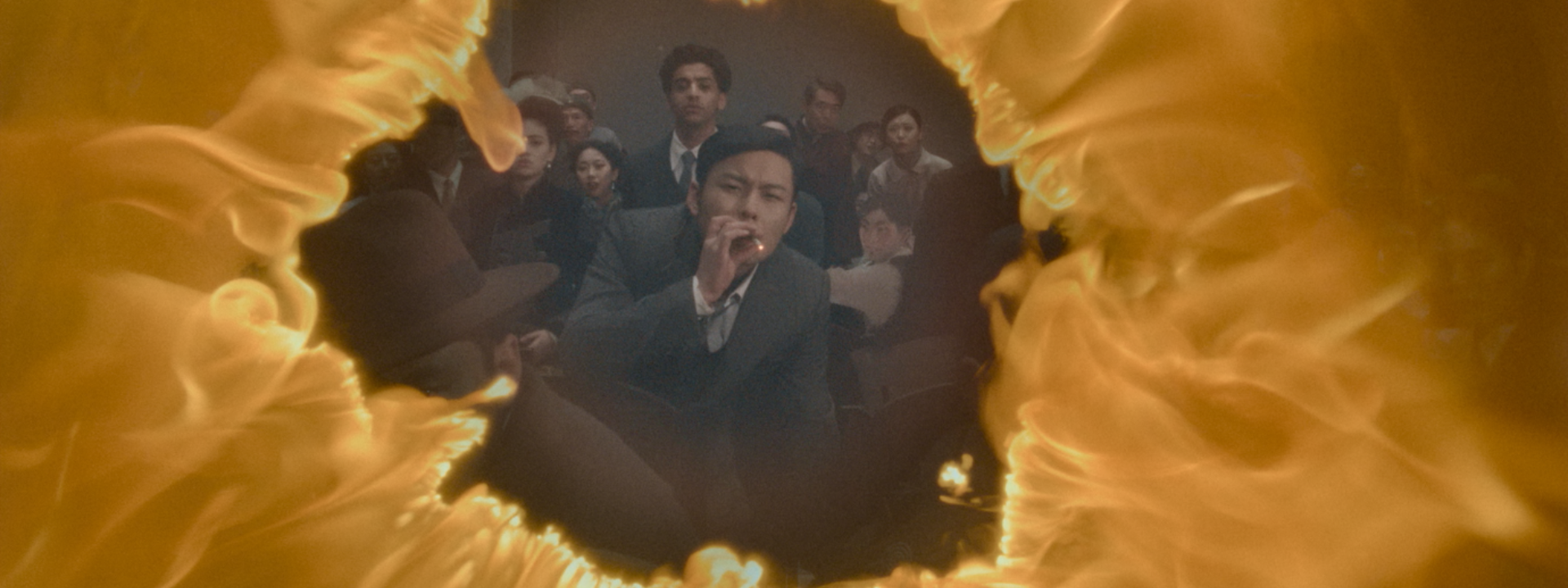
Actually, my approach to work is highly systematic. I meticulously organize every element in a scene—props, settings, and cause-and-effect in story etc.— with strict logic. But once that framework is in place, I rely entirely on intuition to evaluate the final result. This creates a significant challenge: On a rational level, everything may seem perfectly executed, yet at the final stage, when I say, “This isn’t right,” no one can tell why. The team isn’t afraid of preparation, but when we reach the critical moment and I reject everything, it’s undeniably frustrating for everyone.
Many are quick to analyze your films through the lens of formalism, but what truly matters in them is the sensation and emotion—the very elements that resist dissection.
My approach is precisely this: to address the technical aspects of filmmaking with rigorous logic, rationality, and precision. I’ve often said that making a film is like constructing a building—but now I realize the crucial difference. In architecture, the work is done when the “house” is complete. But in film, the final creation isn’t the “house”—It’s the person who enters it. I invest immense effort, resources, and time into building this “house” , yet the true film only exists when an audience inhabits it. People often misunderstand this. They assume the structure I’ve built is the film, but no—the real film is the guest: someone who spends a night in this house and wakes up saying, “Last night, I dreamed a film.” Perhaps this confusion arises because the extremity of the audiovisual language overshadows the humble emotional core at its heart.
What was your most significant discovery while making this film?
The imagination originated from cinema can break through many difficulties and obstacles so easily. Before this project, I wasn’t entirely convinced that cinema, or art in general, could achieve this. I had considerable concerns beforehand, anticipating significant hurdles. However, upon completion, I realized that the character “Fantasmer” reaches the final destination with such profound emotion, is something I hadn't foreseen. While archival or realistic reconstruction certainly possesses historical authenticity and power, true abstraction can offer a scope and grandeur that direct replication cannot. This potent capacity for generalization is a key attribute of cinematic art.
RESURRECTION made me feel something very strongly: the feeling of carefreeness, even of childlike innocence, that emanated from LONG DAY’S JOURNEY INTO NIGHT now seems to be a thing of the past, which evokes a certain sadness.
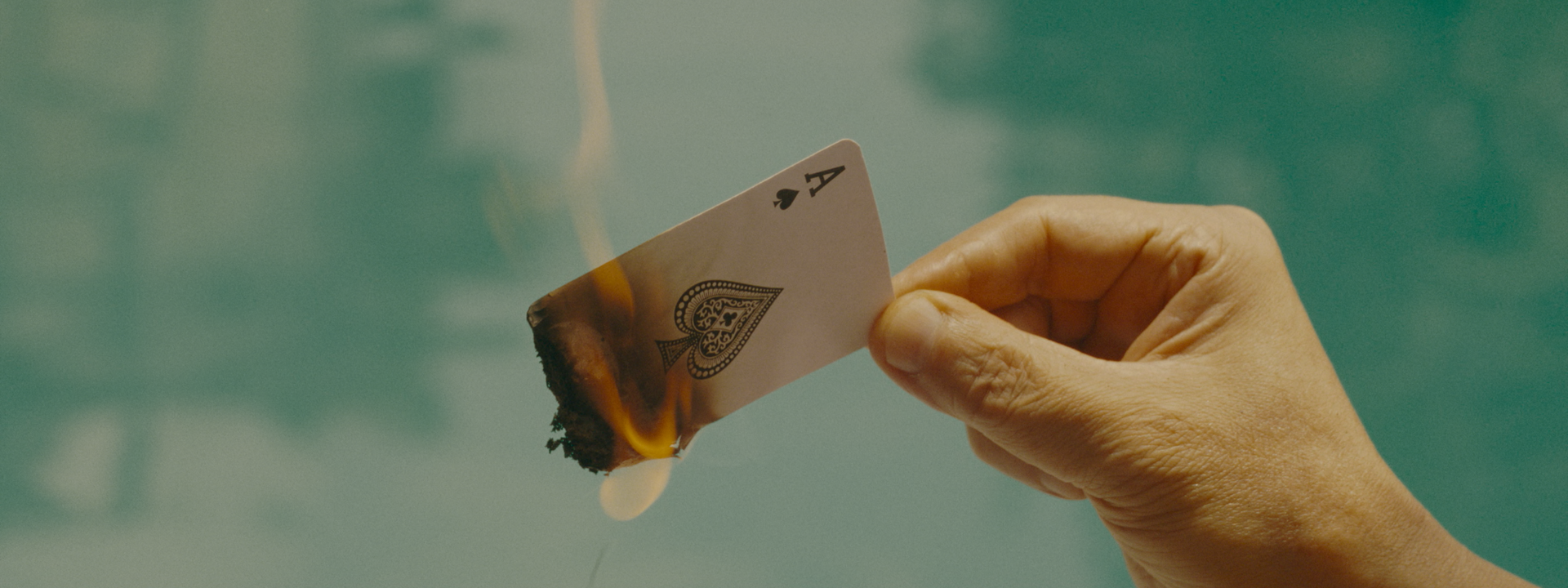
I find it very sad. The film’s ending caption highlights the heart of the entire work—those two “Farewells.” That world of cinema has collapsed, and everyone ultimately comes to acknowledge it in the theatre. It’s not a profound expression, but it’s certainly a very emotional one. Art then becomes the most useful thing: it doesn’t just record that moment, it sings it—this very sad thing, something resigned, which is not even despair, nor hope. If I had to describe it emotionally, it would be a deep melancholy, an intense regret.
Interview by Wang Muyan
.png)
.png)
%402x.svg)