

PRESS NOTES : SIRĀT
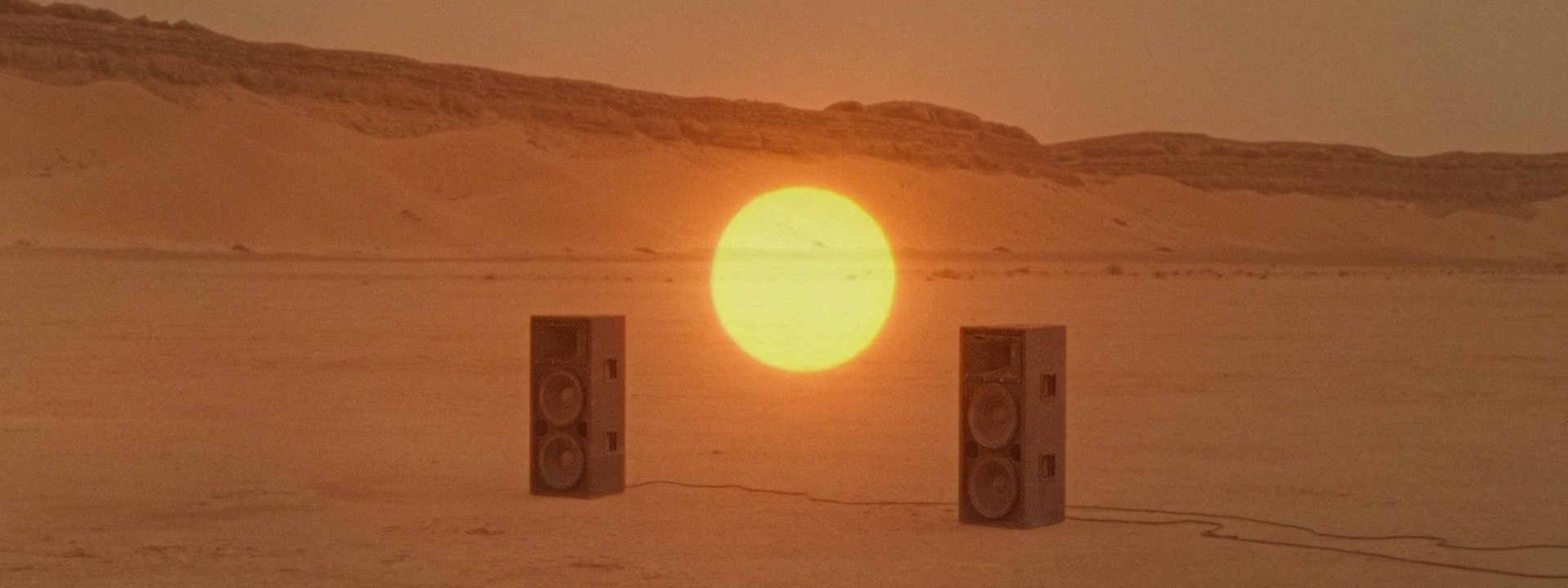
From writer-director Oliver Laxe (Fire Will Come, Mimosas) comes an explosive and transformative descent into the Moroccan desert, where a Spanish single father Luis (Sergi López) and his young son Esteban (Bruno Núñez Arjona) infiltrate an underground rave scene in search of a missing girl in her early 20s.
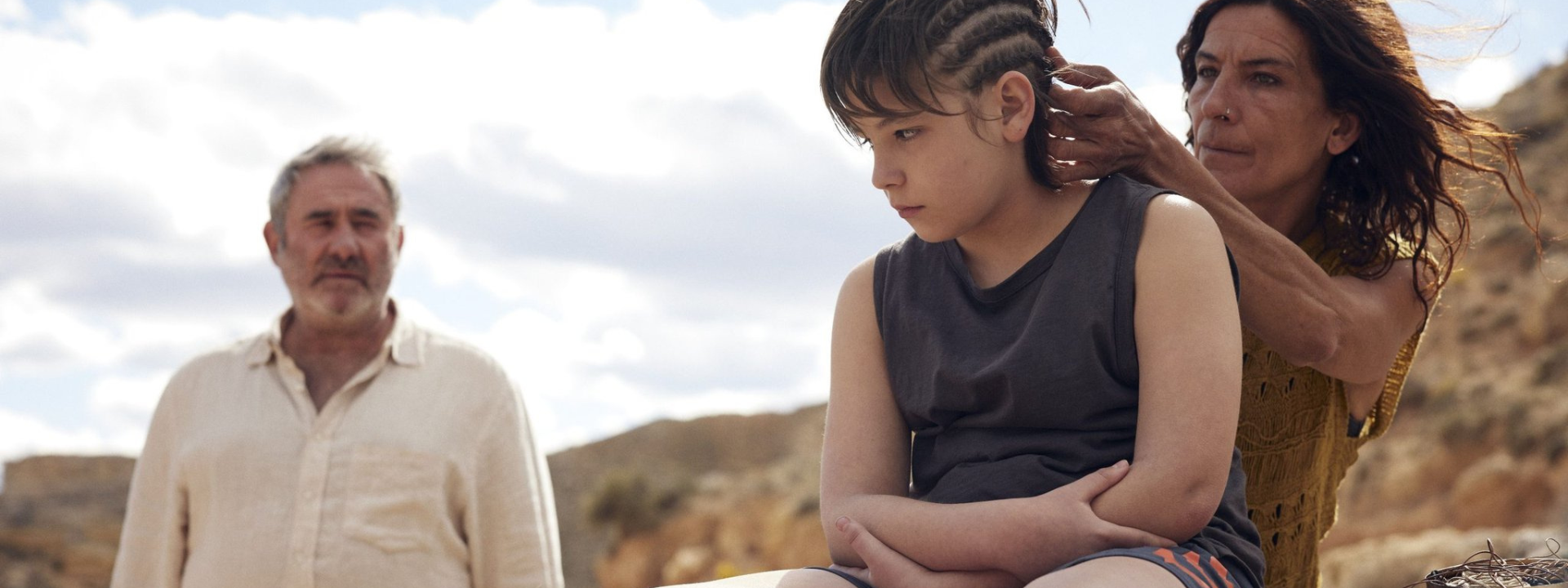
Winner of the Jury Prize at the 2025 Cannes Film Festival, where Laxe’s three previous features each premiered and won awards, Sirāt marks the international breakout of an uncompromising visionary whose latest work taps into the tumultuous and terrifying times we are living through. A hero’s journey turned inward, exploring themes of the individual versus the collective during times of unbearable tension and turmoil, Sirāt embraces transcendence, offering hope, connection and perseverance amid our shattering darkness.
“Sirāt addresses the war that is looming large in our world, one in which we will be obliged to ask ourselves what it means to be human,” says Laxe. “As cultural walls and class distinctions erode, Luis — who hails from a different social context as the ravers he meets — discovers he is just as wounded and broken as his companions. But the ravers I have known, and the ravers that inspired and appear in this film, are already in dialogue with their wounds — Luis, for his part, must decide whether he’s ready to join this family of mutilated people”
Sirāt opens with an epigram taken from Arabic scripture, referring to a mythical bridge conjoining heaven and hell. It’s also a term meaning “the path” or “the way,” hinting at routes both physical and metaphysical. “I like this idea that to get to Paradise, sometimes you have to go through hell,” says Laxe, who is a practicing Muslim. “This is the essence of the movie — that heaven and hell are not these closed or separate rooms; you have to go through one to get to the other, something Luis experiences on his own journey.”
Laxe was born in Paris in 1982, the son of Galician immigrants. When he was six, his family returned to Northwest Spain; after completing his studies in audiovisual communication, Laxe moved to Tangier, Morocco, where he self-produced his 2010 feature debut, You Are All Captains. His second feature, Mimosas, filmed in the Atlas Mountains of North Africa and won the Critic’s Week Grand Prize at the 2016 Cannes Film Festival. Returning to Galicia, Laxe made his third feature, Fire Will Come, in 2019, in the heart of the Os Ancares Mountains in Spain; the film won the Jury Prize in the Un Certain Regard section of the Cannes Film Festival. Fifteen years after his debut premiered in Cannes, Laxe premiered Sirāt in Competition, where it quickly became the talk of the festival.
Laxe’s cinematic heroes — his so-called Holy Trinity — are Bresson, Kiarostami, and Tarkovsky, representing mind, body, and spirit, respectively. He considers Sirāt his biggest release to date; after premiering to controversy and acclaim in Cannes, the movie opened theatrically in Spain, where it has attracted nearly half a million viewers in only two months.
“I wanted to make something that expressed the best of genre and popular cinema, capturing the magic of adventure without losing the sensory richness of the image,” says Laxe. “Curiously it’s the most open and accessible of my movies, but also my most radical — a spectacle that shakes you and scrapes at something deep inside. Finding that balance was incredibly difficult, because the story gradually dematerializes as it moves forward.
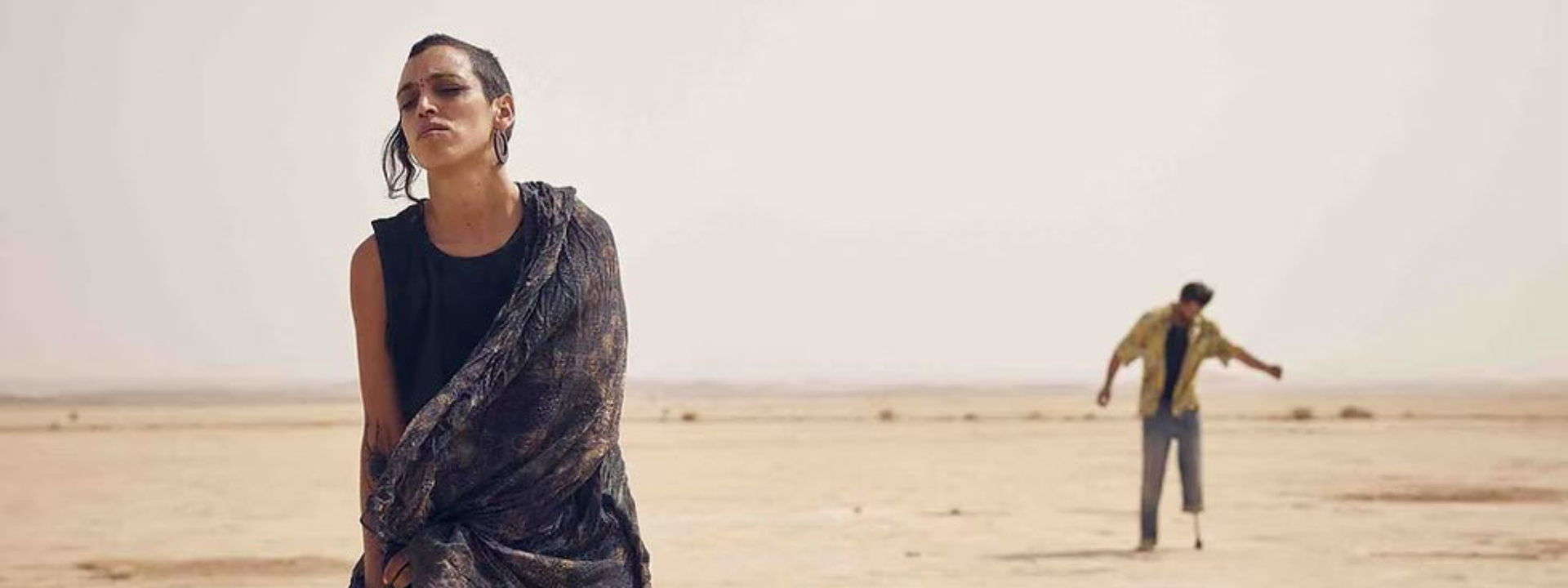
Laxe started thinking about Sirāt in 2011, when he was living in the Moroccan desert, beginning—as he does all his projects—with a singular image in his mind: dust kicked up by trucks driving fast through the desert. The filmmaker was enchanted by the Sahara Desert, a vast open space onto which one can project any number of things. “When you’re there, you feel the stratification of the soil and stone — you feel the passage of time, and the creation of the planet from its inception,” says Laxe. “It’s a metaphysical landscape where you feel like you are nothing. But it’s not a feeling that gives me anguish. It makes me feel humble.”
He also finds the desert to be a place of escape as well as confrontation — somewhere one can be forced to turn within. “Humans are easily distracted, which is normal because the pain of the world is very strong,” says Laxe. “But in the desert you start to look inside yourself; you’re confronted by your own limits while surrounded by limitless earth and sky. The desert gives and takes from us in equal measure.”
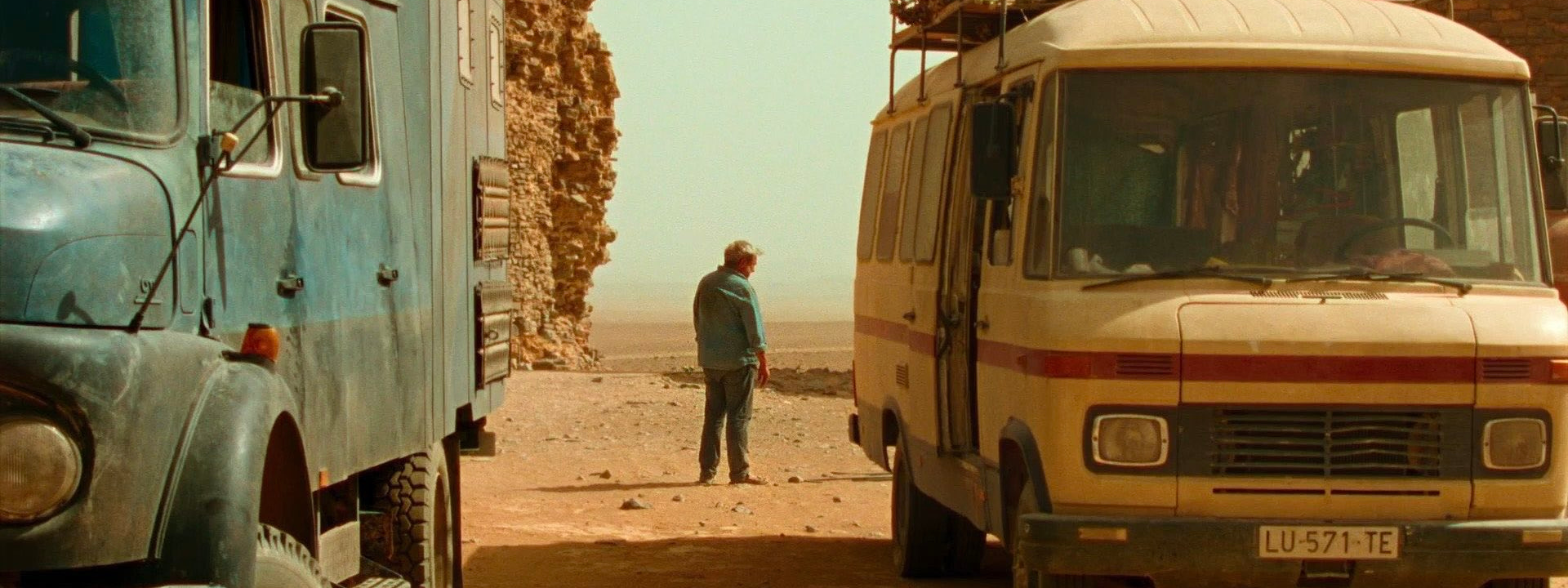
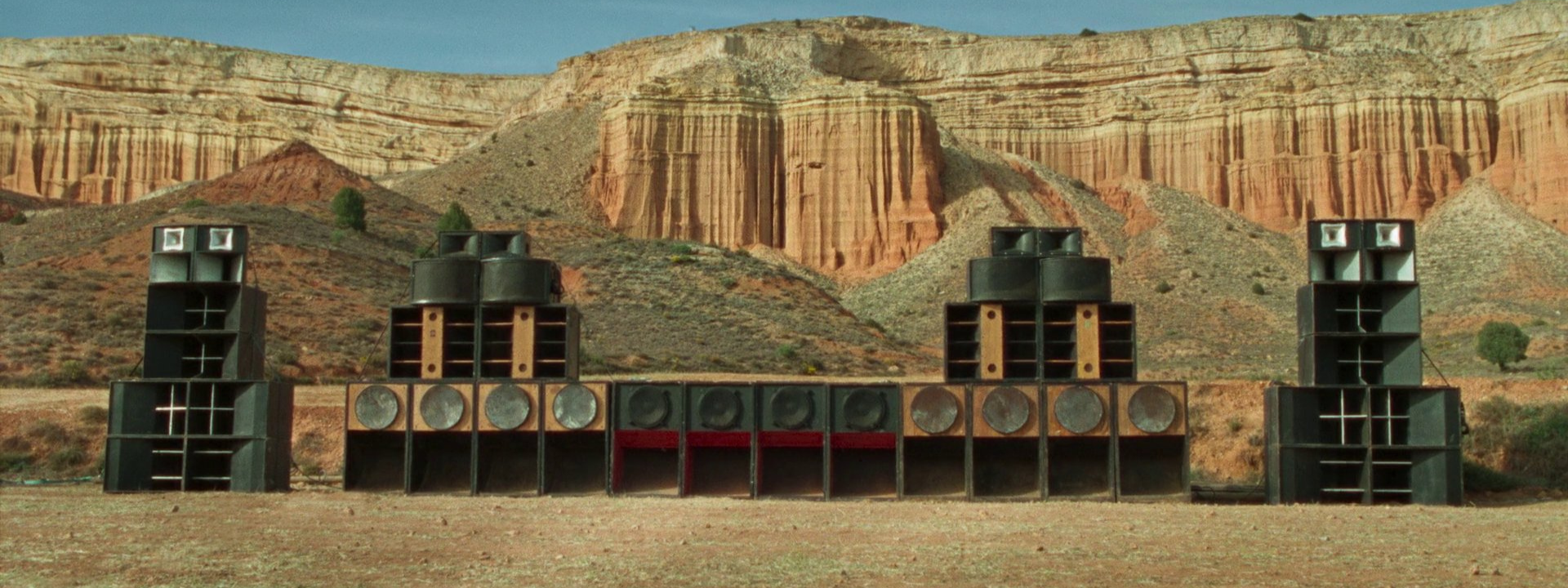
Three years into Laxe’s residency in the Moroccan desert, some ravers came to organize a party near where he lived. He and his then-partner, Nadia Acimi, a long-time raver in the European travelers’ scene, started hanging out with them. “This was the moment when all the images I was thinking about in the desert suddenly crystallized,” says Laxe. “Obviously Sirāt is not about rave parties — but it’s very much about this nomadic community we encountered. I found in these people a perception of life and the world that I shared. I felt like I belonged to this tribe, and in making this movie, I became a raver.”
Most of the script for the movie came to him while dancing at raves across Europe with Acimi. The images came fast and furious: Techno music, Islam, the majestic desert landscape. “I like reading the Quran and listening to techno and I saw that spiritual bridge between worlds,” says Laxe. “People say I make religious cinema —and I like that —because the origin of the word religion comes from the Latin religare, which means ‘link to’ or ‘bind’; we as artists must show how things are connected and not separated. It's my goal as a filmmaker.”
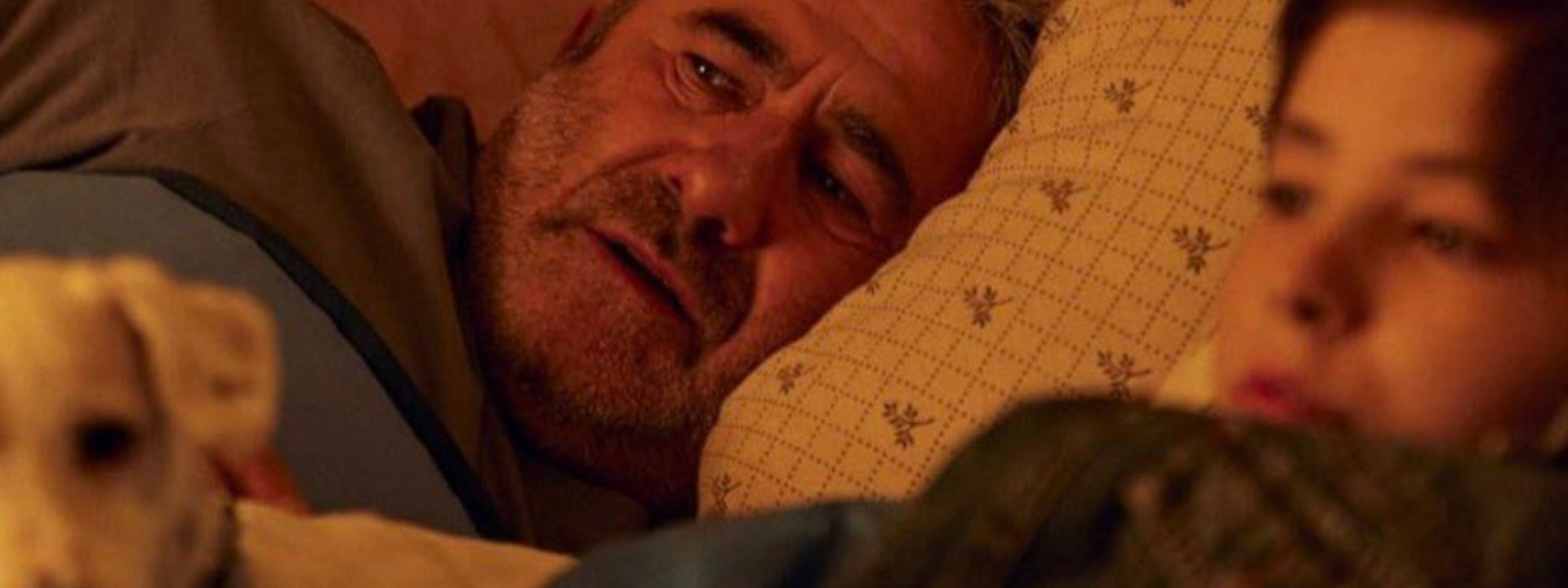
The rave parties Laxe and Acimi frequented were rooted in the Free Party Movement of the ‘80s and ‘90s, originating in the U.K. through roving collectives like Spiral Tribe, before they became outlawed near the turn of the century and forced onto the European continent. “The Free Party Movement went through a lot in terms of repression and exile, with successive governments in the U.K. enacting anti-gathering policies,” says David Letellier, a.k.a. Kangding Ray, who composed Sirāt’s hypnotic techno score. “The movement survived in Europe, particularly in Northwest France and Spain — the ravers kept this very radical scene alive through the years.”
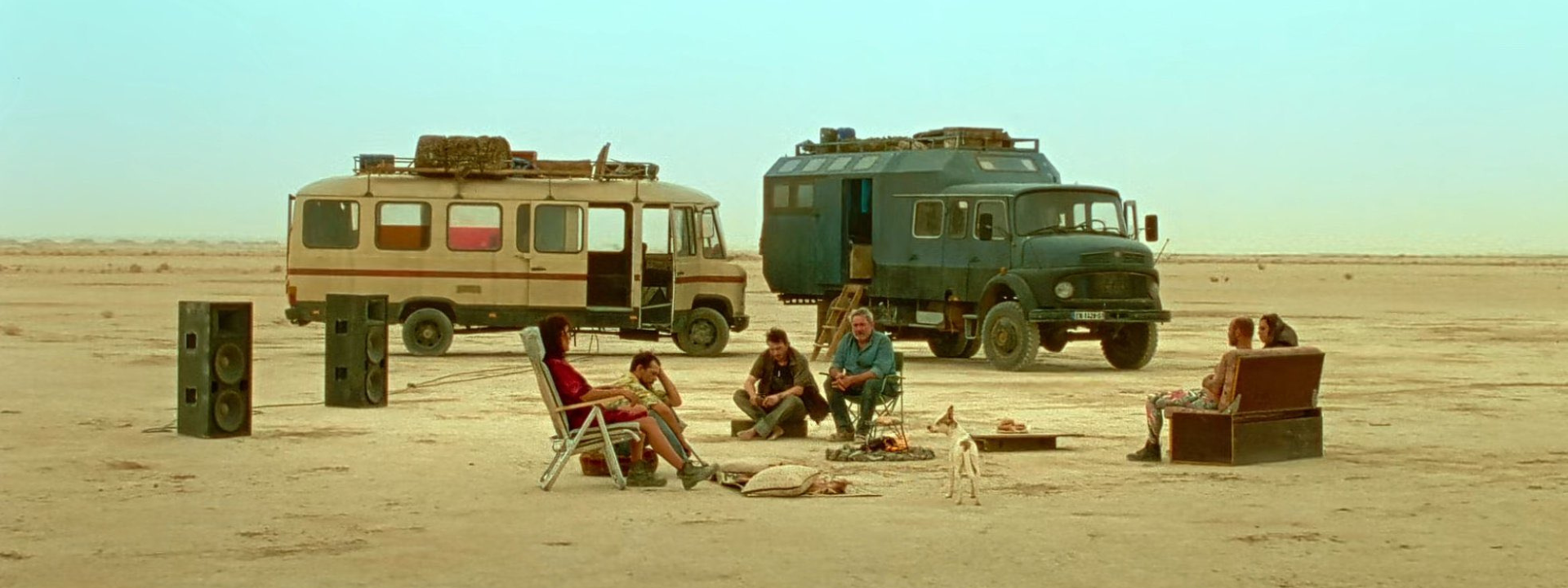
Later in the production, after the script was written, Laxe and Acimi worked directly with two European offshoots of Spiral Tribe, the Dropping Caravan and Trackers, from whom they culled members to appear as ravers in the story of a father and son who infiltrate a band of nomads journeying through the desert from one underground party to the next.
.png)
.png)
%402x.svg)