

A Conversation with Kiyoshi Kurosawa and Adam Nayman
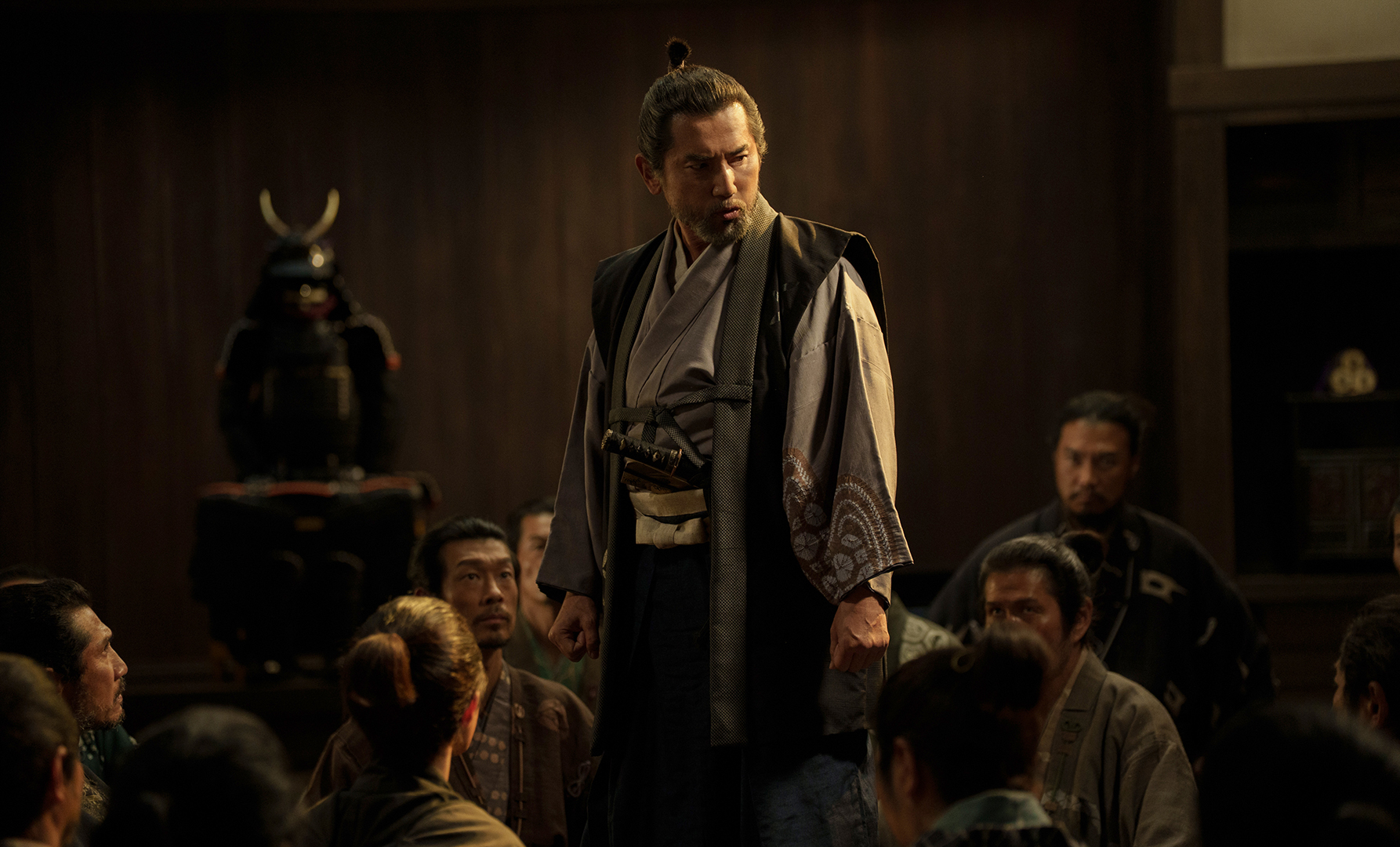
Ahead of The Samurai and the Prisoner, filmmaker Kiyoshi Kurosawa discusses adapting Honobu Yonezawa’s acclaimed novel, his approach to the jidaigeki tradition, the film’s depiction of violence and mystery, and working with Masaki Suda and Masahiro Motoki.
Interview by Adam NaymanFeaturing Kiyoshi Kurosawa
Originally published in the official press notes for The Samurai and the Prisoner.
How did you come to read Honobu Yonezawa's novel?
The novel had won a string of literary prizes in Japan and was very well known. I don't read much fiction myself, so I had no idea about it at all until my producer recommended it to me. That said, I'd been interested in the Sengoku-era warlord Araki Murashige for some time. On my first reading, I realized that this was an unusual kind of book for Japan: a strikingly logical, meticulously constructed mystery novel. It was, of course, tremendously entertaining, and I felt that getting to adapt it into a film myself would be a really meaningful challenge.
The novel combines elements of historical drama and mystery fiction. How do you think these genres come together in Honobu’s writing? And how did you approach the process of adaptation?
Because this is a mystery, the story naturally hinges on a crime, a motive, and a method, and those elements are interlocked in such an intricate and precise way that if even one piece were missing, the whole story could collapse. We had to be extraordinarily careful when writing the screenplay. But more than any of the individual criminal puzzles, the greatest fascination of the story lies in the mystery surrounding the protagonist Araki Murashige's own words and actions. The novel's portrayal of him as a character so unlike any conventional Sengoku warlord set my imagination racing.
This is not your first period piece but it is your first film that exists outside of anything like a modern frame. How did you approach this era of history? Were you interested in realism or stylization? Were there films or filmmakers that influenced your depiction of the Sengoku-era? Did you try to avoid obvious reference points?
I had no intention of inventing a wholly new style of period drama. If anything, I set out to make an extremely orthodox jidaigeki: the kind that's actually quite rare these days. The reason is that I felt a sense of crisis: contemporary Japanese audiences have largely forgotten the great Japanese period dramas of the 1940s and '50s, which I consider the genre's richest era, and what circulates today is mostly period work that's been loosely modernized (which can be perfectly enjoyable on its own terms, as a kind of fantasy). I worry the genre itself may be falling apart. At the same time, I had a contradictory desire: to aim for classical form while telling a contemporary story. In that respect, the real Araki Murashige, who lived in 16th-century Japan, was a man with strikingly modern thinking for his time, which made him an ideal protagonist through whom this film could speak both to the history of cinema and to our present moment.
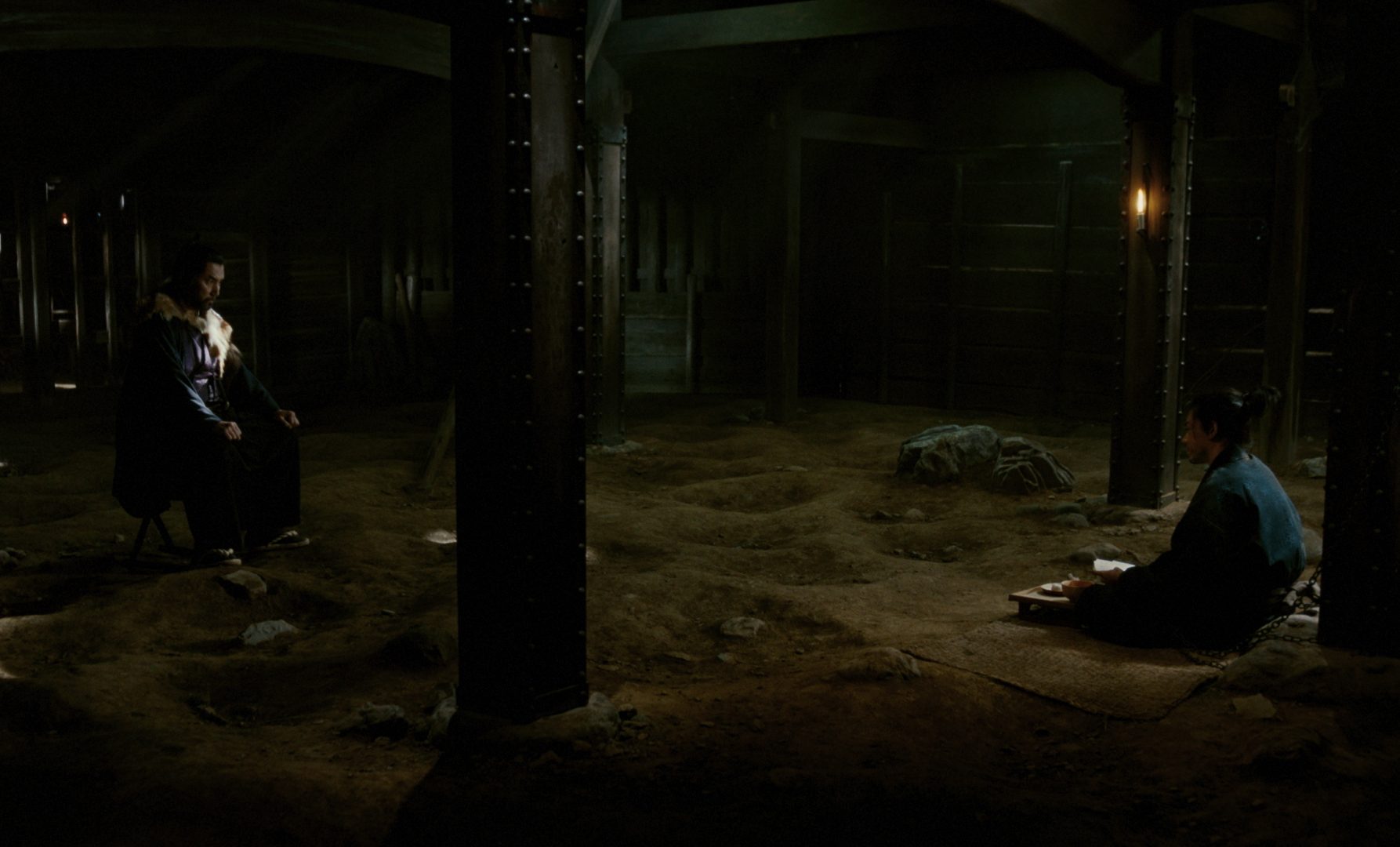
The structure of the novel and the film are similar in that they move through different seasons; can you talk about the landscape and setting as a character within the novel and the film? And also about the locations: the dungeon is a very abstract space. You’re often associated with modern, urban interiors; how did you approach the architecture, aesthetics and decor of the 16th Century?
It's a very interesting question, but a hard one to answer. In all the films I've made until now, I've always wanted the locations to be places that imply a world existing beyond their edges — but this time, that wasn't the case. In a contemporary drama, you can be sure that the real world extends beyond the frame, beyond the windows, beyond the doors. But what is the reality of 16th-century Japan? How are you supposed to make the audience feel that "outside"? In the end, I never figured out what kind of world actually lay beyond the windows of an old Japanese house. Maybe making a period film is, fundamentally, almost the same as making a fantasy. So perhaps the dungeon scene wasn't the only one — every location in this film may in some sense have been an abstract space. But by treating each location as a kind of theatrical stage, I think the crew, the actors, and I were able to find our way to the reality of each scene.
The phrase “advance to paradise, retreat into hell” is very important in the novel; the story begins with it. Do you think that The Samurai and the Prisoner is a story about philosophy? Does the phrase have a political dimension to you?
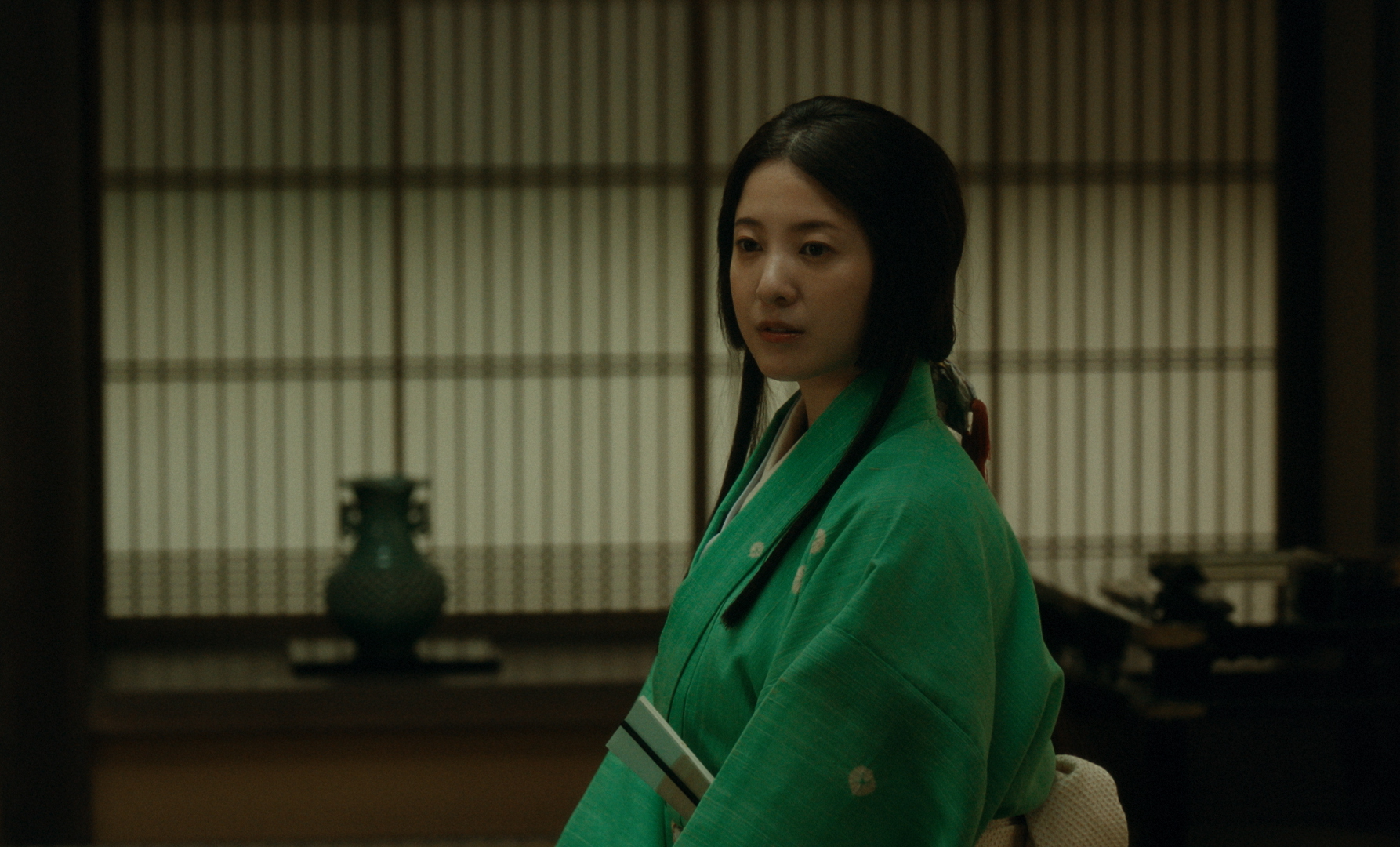
"Advance to paradise, retreat into hell" is a phrase that originates in old Japanese Buddhism, but I think it still applies very much to the present day. Everyone knows how much misery is being scattered around the world by the foolish posturing of those in power who are bound by these very words. And the many people in the grip of the illusion of economic prosperity are bound by them just the same. In that sense, the line that the heroine Chiyoho speaks near the end of the film — "There is paradise even for those who retreat" — has a major influence on Araki Murashige's subsequent actions, and it carries tremendous weight for me as well.
Can you talk about the approach in this film to violence? How do you deal with violence in your staging while still leaving things to the imagination?
I've made many violent films over the years, but the truth is that I'm not particularly fond of overt depictions of violence. If you want to see real violence, you can find as much of it as you'd like on YouTube these days — but that isn't cinema. Violence on film, I believe, has to be real and restrained at the same time. You obviously can't unleash actual violence on a set, so any expression of violence has to come into being purely as fiction, as direction, as performance. It's a critical moment that tests the abilities of both the director and the actors. And precisely because it does, the instant you start showing off that craft, a blatant artificiality fills the screen and the viewer is pulled right out of the film. The line between cinematic reality and fiction is paper-thin, and it's the depiction of violence, more than anything, that exposes that line.
Speaking of performance, how did you cast your lead actors? I’m especially interested in Masaski Suda, whose presence is very different here from Cloud even though there’s a certain ambiguity—and maybe menace—that exists between the two roles...
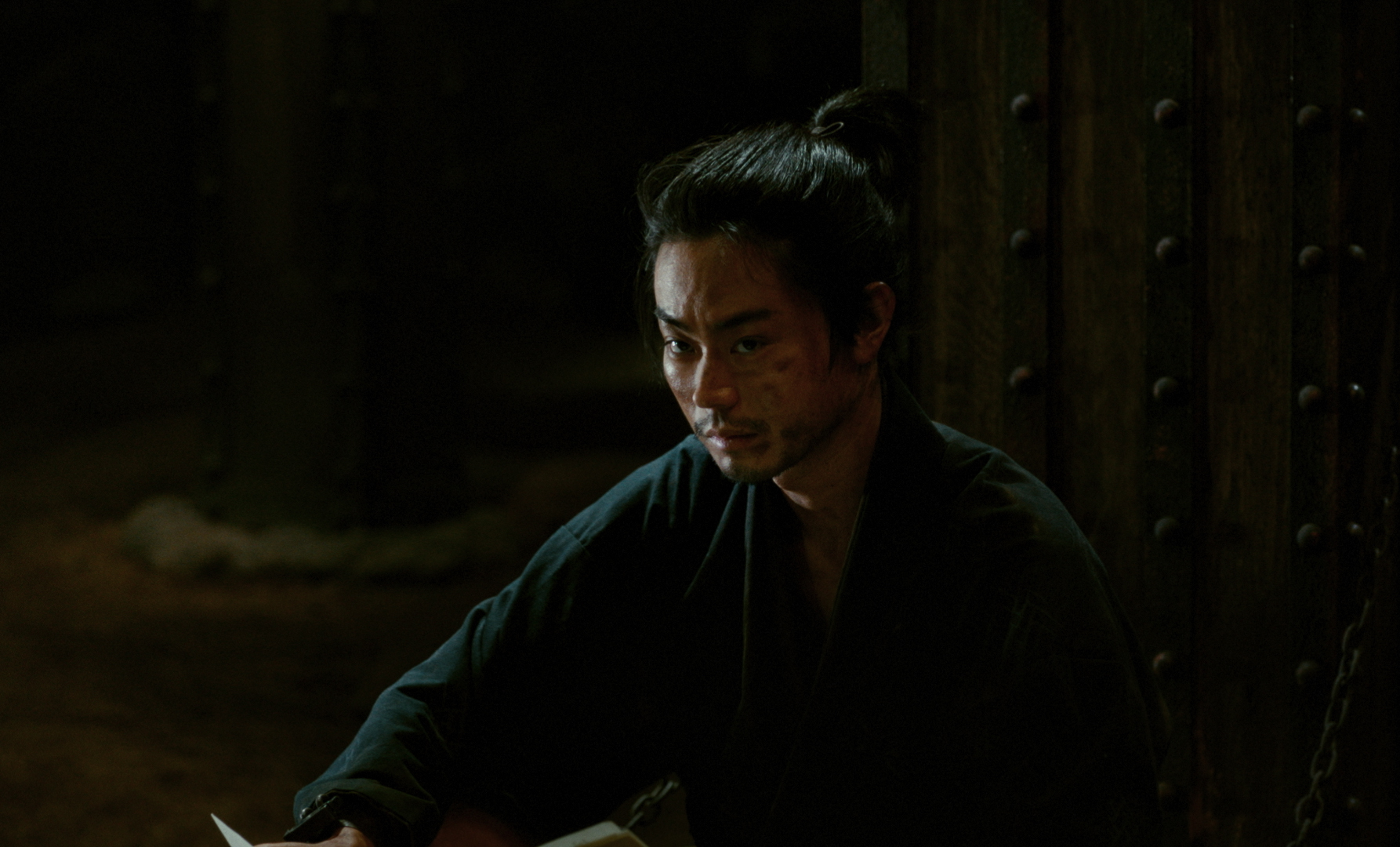
Among Japanese actors in their early thirties, there is simply no one besides Masaki Suda who can play a character this ambiguous and complex — someone whose true intentions are impossible to read, who can shift from saint to villain in a single instant. For Araki Murashige, Kuroda Kanbei is at times a partner, at times a servant, and at times something almost demonic. This difficult portrait of Kanbei would have been impossible without Masaki Suda. That said, the real axis of this film is the character of Murashige himself, who is tossed about by Kanbei and yet gradually finds his own path forward — how a man of immense power lets that power go, breaks free of it, and finally attains his freedom. That, I'd say, is the central theme of the film. And Masahiro Motoki played this protagonist, who undergoes a complete 180-degree transformation, to absolute perfection.
Can you talk about the idea of mystery in your work? As an artist, do you identify more with the character of the samurai (the one who wants to know) or the prisoner, the one who seeks to explain? Or do you see yourself in both?
My view is that, in a film, the author has an obligation to provide an answer to every mystery he poses. At the same time, I don't think it's necessary to explain the reasons behind the protagonist's actions. So Murashige goes about solving the various mysteries with great precision, but the reason he eventually walks out of the castle at the end is never explained. Historically, it's a fact that Araki Murashige suddenly left the castle, and I simply depicted that as it happened — but the real reason he did so is something nobody knows. I don't know either, of course.
For audiences who are more familiar with your other, more obviously horror-oriented work, in what ways would you say The Samurai and the Prisoner connects with your earlier films?
I'm not a horror specialist; I've always aspired to be a craftsman who can take on any genre. So when an offer came in to make a period drama based on a great novel, there was simply no question of turning it down. I have no interest at all in leaving my own fingerprints on a film. And yet, there may well be some hard-to-hide common thread between the assortment of films I've made over the years and The Samurai and the Prisoner. Finding that thread is always the work of critics and viewers. Time and again, some aspect of my authorial sensibility that I had never given any thought to get suddenly identified — and each time, along with my surprise, I feel a deep sense of satisfaction: I'm so glad I made this film. With this new picture, I'm quietly hoping for the same thing to happen again.
.png)
.png)
%402x.svg)